


Our Blogs
Inspiring journeys and travel stories from around the world

Is a Meghalaya Tour Worth It for Mumbai People? Honest Take
16 days ago
Published By Shouvik - Founder, Travelxploria | Tour And Travel Expert
Mumbai gets around 2,200 mm of rain a year and complains about it for four months.
Mawsynram, a village in Meghalaya, gets nearly 11,900 mm and built bridges out of tree roots so people could cross rivers during it. That is more than five times your annual rainfall, in a place that treats it as normal.
So here is the odd pitch. Meghalaya is a monsoon state, and you are from the most monsoon-obsessed city in India. Is it worth flying 2,000 km east to see rain done properly? Or is it a wasted leave?
The short answer
Yes, for most Mumbai couples, friend groups, and families with kids above 8 or so. Two conditions.
Give it at least five days, and go between October and March. Do that and you get waterfalls at full volume, a river so clear the boats look like they are floating on air, and hill towns where the evening temperature drops to 10 degrees while Mumbai is sitting at 30. Get the timing wrong and you will see fog, closed trails, and a brown river.
The rest of this article is about getting it right.
Why Meghalaya lands differently when you are from Mumbai
Every Mumbaikar has a complicated relationship with rain. You have waded through it, cursed it, and watched it flood the tracks at Kurla. You know monsoon as a problem.
Meghalaya flips that. Here the rain is the reason the place exists. The waterfalls at Cherrapunji, the moss on every stone, the caves, the root bridges. All of it is rain, turned into scenery. Nohkalikai Falls drops roughly 340 meters off a cliff, which makes it the tallest plunge waterfall in the country, and you can hear it before you see it.
Then there is the living root bridge. The Khasi people train the aerial roots of rubber fig trees across streams over 15 to 25 years until they can hold 50 people. There are about 100 of them across 70 odd villages, and India has nominated the whole landscape for UNESCO World Heritage status in the 2026 to 27 cycle. Nothing in Maharashtra, or anywhere else in India, looks like this.
And the part Mumbai people mention most after they come back: it is quiet. Shillong has cafes and live music but shuts by 9 pm. Mawlynnong, which Discover India magazine once called the cleanest village in Asia, has a total of maybe 500 people. After a year of Andheri, the silence is a physical sensation.
How do you get there from Mumbai?
Meghalaya has no direct flight from Mumbai. That is the first thing to accept.
The route is Mumbai (BOM) to Guwahati (GAU), which is a non stop flight of roughly 2 hours 50 minutes to 3 hours 20 minutes depending on the airline. IndiGo, Air India, and Akasa fly it, with fares usually in the ₹7,000 to ₹9,000 range one way if you book a month out. From Guwahati airport, Shillong is about 100 km and 2.5 to 3.5 hours by road, depending on traffic near the airport and how many times you stop at Umiam Lake for photos.
Shillong does have its own airport at Umroi, but flights are limited and none come from Mumbai, so ignore it for planning.
The tip that saves a day: take the earliest Mumbai departure, land by 9 or 10 am, and you are in Shillong by lunch. A 2 pm flight puts you on a dark hill road after sunset and turns Day 1 into a write off.
If you want the airport to hotel part handled, the Shillong, Cherrapunji and Mawlynnong tour starts with the Guwahati pickup, which matters more here than in most places because Guwahati taxi negotiation at 10 am is not a great start to a holiday.
When should a Mumbaikar go? (month by month)
October to November: best window, no contest. Monsoon has just ended, so every waterfall is still full, but the skies have cleared. The Umngot river at Dawki turns glass clear from November. And Shillong's Cherry Blossom Festival runs in mid November, with pink trees lining the roads. Diwali holidays line up. Book early.
December to February: dry and cold. Waterfalls are thinner but still running, Dawki is at its clearest, trails are dry, and nights in Shillong drop to 4 or 5 degrees. If you want the double decker root bridge trek, this is the safest time for it. Mumbai winter is 18 degrees at best, so pack real warm clothes.
March to May: warm and green. Pre monsoon showers start in April, which is annoying, but the hills are green again and crowds are thin. Reasonable value window. Not the best photos.
June to September: for the rain chasers only. If you specifically want to see the wettest place on earth doing its thing, this is it, and it is a spectacle. But the root bridge trails become dangerous, Dawki turns muddy, and fog hides the valleys half the day. We book a few Mumbai guests in this window every year. Most come back happy. All of them came knowing what they signed up for.
Which Meghalaya trip fits your holiday length?
3 to 4 days: Shillong only
Umiam Lake, Elephant Falls, Shillong Peak, Laitlum Canyon, Police Bazar, a cafe or two. It is a good long weekend, and the weekend getaway to Shillong package is built for exactly this. You will not see Cherrapunji or the root bridges though, and you will fly home knowing you missed the main event. If this is your only option, take it. If you can stretch to five days, stretch.
5 to 6 days: Shillong plus Cherrapunji plus Dawki
This is the trip. Two nights Shillong, two nights Cherrapunji (Sohra), a day trip to Dawki and Mawlynnong, fly out of Guwahati. You get the falls, the caves, the root bridges, the boat on the Umngot, and the cleanest village in Asia. For couples and friend groups, the Wonderful Shillong tour covers this loop without the rushed feel.
7 to 8 days: add Kaziranga
With a full week, drive back into Assam and add two nights at Kaziranga National Park. One horned rhinos, elephant safaris, and a completely different landscape from the Khasi hills. For families with kids, the Shillong Kaziranga family package is the one we recommend, because the safari is the thing kids talk about for months. Note that Kaziranga usually closes from May to around October for the monsoon, so this combination works best from November to April.
Who should NOT book this trip
Nobody else puts this in a travel article, so here it is.
- If knees are a problem. The double decker root bridge at Nongriat is around 3,500 steps down and 3,500 back up. There is no shortcut. Elderly parents and anyone with knee or back issues should see the single decker bridge near Riwai instead, which is a 10 minute walk. Plan for this before you book, not at the trailhead.
- If you want nightlife. Shillong closes early. Cherrapunji closes earlier. If your idea of a holiday is Goa after dark, this is not it.
- If you are a strict vegetarian and fussy about it. Khasi food leans hard on pork and smoked meat. You will find vegetarian food everywhere, and Shillong has plenty of Bengali, Punjabi, and South Indian restaurants, but Cherrapunji homestays have limited menus. Tell your tour planner in advance and it is a non issue.
- If you have fewer than 4 days. Guwahati transit eats half a day each side. A 3 day trip is two travel days and one Shillong day.
- If you want a pool and room service. Meghalaya is a walking, driving, climbing holiday. Kerala is better for sitting still.
Things Mumbai people get wrong about Meghalaya
A short list, from experience.
- Packing for Lonavala. Shillong in December is 4 degrees at night. Cherrapunji is windy and wet even in the dry season. Bring a real jacket, a rain shell, and shoes that grip wet stone. Not floaters. Not white sneakers.
- Skipping Dawki because it is "just a river." It is the most photographed spot in the state for a reason. Go early, before 9 am, when the water is stillest.
- Booking Cherrapunji for one night. The root bridge trek alone takes 6 to 7 hours round trip. One night means you see the falls and skip the bridge. Two nights minimum.
- Assuming the monsoon is like Mumbai's. Mumbai rain comes in bursts. Cherrapunji rain in July can go on for three days straight. Different animal.
- Not carrying cash. Card machines exist in Shillong. Beyond it, especially in the villages, cash is what works.
What does it cost from Mumbai?
Rough numbers so you can budget.
Return flights Mumbai to Guwahati run about ₹15,000 to ₹18,000 per person if you book 4 to 6 weeks out, more around Diwali and Christmas. Land packages covering hotels, a private vehicle, and sightseeing for a 3 to 5 day budget itinerary start around ₹9,000 to ₹11,000 per person and climb with better resorts in Cherrapunji and the Kaziranga extension. Boat rides at Dawki, root bridge entry, and meals outside breakfast are usually extra.
So a couple on a 6 day Shillong, Cherrapunji, Dawki trip is looking at roughly ₹55,000 to ₹75,000 all in. A family of four on the Kaziranga version sits closer to ₹1.3 to ₹1.6 lakh. About what a Kerala week costs now, and nothing in Kerala looks like a root bridge.
Final word
Is Meghalaya recommended for Mumbai people? Yes, if you give it five days and go between October and March.
It is the one place in India where the thing you have spent your life complaining about becomes the thing you flew to see. Waterfalls, clear rivers, clouds sitting in the valley, and a silence Mumbai cannot sell you at any price.
Pick October if you want the falls at full power. Pick January if you want the trek and the clearest water. Either way, book the early flight.
Which one are you: waterfalls in October or the trek in January? Tell us in the comments and we will tell you what to pack.
Written by Shouvik, Founder, Travelxploria. Shouvik has been planning Northeast, Himalayan, and international holidays for Indian families since founding Travelxploria (a unit of Explorer Club Holidays) and writes about the practical side of travel: routes, timing, and what actually goes wrong on the road.

Himachal Pradesh from Mumbai: Should You Actually Go?
1 month ago
Published By Shouvik - Founder, Travelxploria | Tour And Travel Expert
Mumbai has never seen snow. Not once.
You have Lonavala for a weekend, Mahabaleshwar for strawberries, and Matheran for a toy train. All lovely. None of them will ever give you a morning where you open the hotel window and the deodar trees outside are white.
So the question is fair. Is Himachal Pradesh actually worth the flight, the hill roads, and the leave application? Or is it just the trip everyone posts about?
The short answer
Yes, for most Mumbai families and couples. With two conditions.
You need at least five full days on the ground, and you need to pick the right month. Get those two things right and Himachal is probably the single biggest change of scenery you can buy inside India without a passport. Get them wrong and you will spend half your holiday in a car and come home annoyed.
The rest of this article is about getting them right.
Why Himachal hits different when you live in Mumbai
Here is the part people underestimate.
Mumbai's humidity sits between 70% and 85% for most of the year, and it peaks near 86% in July and August. Your body has been running in that for years. You do not notice it anymore, the same way you do not notice the local train announcement.
Then you land in Shimla, which sits at roughly 2,200 meters, and the air is thin, dry, and cool. Your shirt stays dry. Your hair behaves. You sleep without the AC and wake up cold. For a lot of first time visitors from the coast, that alone feels like a reset.
Add the fact that Mumbai's "winter" bottoms out around 16 to 17 degrees at night while Manali in January is regularly below zero, and you understand why the trip feels bigger than the map suggests.
There is also the toy train. The Kalka to Shimla line is a UNESCO World Heritage Site, one of the three Mountain Railways of India, and it climbs 96 km through more than a hundred tunnels. If your kids liked the Matheran train, this one will ruin them for it.
How do you actually get there from Mumbai?
This is the bit that decides whether the trip is fun or a slog.
The easiest route is a direct flight from Mumbai (BOM) to Chandigarh (IXC). Non stop flights take about 2 hours 10 minutes, and IndiGo and Air India run several a day. From Chandigarh, Shimla is roughly 3.5 to 4 hours by road, and Manali is around 8 hours.
The Delhi route also works, especially if fares are better, but it adds two to three hours of driving. Most Mumbai travelers we plan for pick Chandigarh.
One practical tip from years of doing this. Take the early morning flight out of Mumbai. You land by 9 or 9:30, you are in Shimla by lunch, and Day 1 becomes a real day instead of a transit day. The 2 pm flight sounds relaxed but it quietly costs you an evening in the hills.
If you want the whole thing handled, the Shimla Manali holiday package is the one we book most often for Mumbai guests. It starts with the airport pickup at Chandigarh, so you are not negotiating with cab drivers at 10 am after a 5 am wake up.
When should a Mumbaikar go? (month by month)
This matters more for Mumbai than for Delhi people, because your home weather is so different from the hills.
December to February: go for snow. This is the only window where the whole point of the trip (snow) is close to guaranteed at Manali, Kufri, and Solang. Mumbai is at its most pleasant in these months, so you are not escaping anything. You are going for the experience. Book early. Christmas week and Republic Day weekend fill up fast.
March to early April: underrated. Snow still lingers above Manali, crowds are thinner, hotel rates are softer, and Mumbai is already sliding toward 33 degree afternoons. Good value window.
April to June: the classic escape. Mumbai in May is brutal. Himachal in May is 15 to 25 degrees in the daytime. This is when Shimla's Mall Road gets crowded, so if you hate crowds, skip Shimla and go deeper. More on that below.
July to mid September: do not. Landslides, road closures, and clouds that hide the very mountains you flew to see. Mumbai already gives you enough rain. Do not fly 1,300 km for more of it.
October to November: the sweet spot. Clear skies, cold nights, autumn colors, and Diwali holidays lining up. Rohtang Pass usually stays open through October. If you can only pick one window, pick this one.
Which Himachal trip fits your holiday length?
Most Mumbai office goers can wrangle 5 to 8 days including weekends. Here is what actually works.
5 to 6 days: Shimla plus Manali
The standard circuit and the standard circuit for a reason. Two nights Shimla, two or three nights Manali, fly out of Chandigarh. You get the toy train, Kufri, Solang Valley, Hadimba Temple, and (in season) the Atal Tunnel, which is 9 km long and the longest highway tunnel above 10,000 feet in the world.
For families with kids or grandparents, the Himachal family vacation package keeps the drive days shorter and builds in rest time, which matters a lot more than it sounds when you have a seven year old and a seventy year old in the same car.
7 to 8 days: add Dharamshala or go offbeat
With a full week, you have two good choices.
Option one, swap Shimla for Dharamshala and McLeodganj. Tibetan monasteries, the Dalai Lama's temple, cafes, and Dhauladhar peaks right over the town. It is a completely different Himachal from Shimla's colonial hill station vibe, and a better fit for couples than Shimla is. The Dharamshala with McLeodganj tour covers it without the rushed feel.
Option two, skip the famous names and go to Kasol, Jibhi, and Tirthan Valley. Riverside wooden cottages, trout, Parvati Valley cafes, almost no tour buses. This is what Himachal locals actually recommend when you ask them. The offbeat Manali, Kasol and Jibhi tour is built exactly for this crowd.
4 days or less: think twice
Two of those days will be travel. You will see Shimla and nothing else, and you will spend the flight home thinking you missed the point. For a short break, Mahabaleshwar or Goa serves Mumbai better. Save Himachal for when you have the days.
Who should NOT book this trip
Nobody else will tell you this part, so here it is.
- If you get carsick. Chandigarh to Manali has hundreds of hairpin bends. Kufri, Rohtang, and Jibhi are worse. Carry Avomine, sit in front, and ask for breaks. If motion sickness is severe, pick Dharamshala (shorter hill drive) or reconsider.
- If your idea of a holiday is a pool and room service. Himachal is a moving holiday. You are in the car most mornings. If you want to sit still, Kerala or Goa is a better spend.
- If anyone in the group has a heart or lung condition. Rohtang is at 3,978 meters. Even Kufri and Solang are high enough to leave some people breathless. Check with a doctor first.
- If you are going in July or August. Already covered. Please do not.
What a Mumbai family needs to pack (that you probably do not own)
Mumbaikars pack for Himachal the way they pack for Lonavala, then freeze. A short list.
- A real jacket, not a hoodie. Down or fleece plus a windproof layer for December to February.
- Thermals if you are going in winter. You can buy them in Manali for a few hundred rupees, but your first night will be miserable without them.
- Closed shoes with grip. Mall Road in Shimla is steep and slippery when wet. Sneakers, not floaters.
- Sunscreen. Hill sun at altitude burns faster than Juhu sun. People get caught out every single time.
- Woolen socks and a cap for kids. Snow at Solang goes into shoes fast.
- Motion sickness tablets. See above.
- A printout of your Rohtang permit if you are crossing beyond Gulaba. Permits are limited per day and issued online only through the official portal.
What does it cost from Mumbai?
Rough numbers so you can plan.
Return flights Mumbai to Chandigarh typically run ₹15,000 to ₹18,000 per person if booked 4 to 6 weeks out, more in peak weeks. Land packages covering hotels, private transfers, and sightseeing start around ₹12,500 per person for a shorter trip and go up with the number of nights and the hotel category. Rohtang permits, adventure activities at Solang, and meals outside breakfast are usually extra.
So a couple on a 6 day Shimla Manali trip is looking at somewhere around ₹60,000 to ₹80,000 all in, depending on hotels and season. A family of four on the same trip will sit closer to ₹1.2 to ₹1.5 lakh. Not cheap, but roughly what a decent Goa week costs now, and you get snow.
Final word
Is Himachal recommended for Mumbai people? Yes, if you give it five days and pick October, November, or the winter and spring months.
It is the most different India you can reach in a 2 hour flight. Cold, dry, quiet, and tall. Mumbai gives you none of those four things, which is exactly why it works.
Pick your window, pick your circuit, and book the early flight.
Which one is it for you: snow in January or clear skies in October? Tell us in the comments and we will tell you what to pack.
Written by Shouvik, Founder, Travelxploria. Shouvik has been planning Himalayan and international holidays for Indian families since founding Travelxploria (a unit of Explorer Club Holidays) and writes about the practical side of travel: routes, timing, and what actually goes wrong on the road.

Top 20 Travel Agencies in Kolkata
1 month ago
Published By Shouvik - Founder, Travelxploria | Tour And Travel Expert
Kolkata has somewhere north of a thousand registered travel agents. Maybe 30 of them are worth your money.
That's the uncomfortable truth nobody tells you when you type "travel agency near me" and Google spits out a wall of sponsored listings. Every agency claims 24/7 support. Every agency claims "best price." Every agency has a stock photo of a couple holding hands on a beach in Bali.
So we did the boring work for you. We went through Google Business profiles, Justdial ratings, actual customer reviews (the angry ones too, not just the five-star gush), years in business, and the range of destinations each agency actually handles versus what they claim on their homepage.
The result is this list: the top 20 travel agencies in Kolkata for 2026, ranked. One agency kept showing up at the top of nearly every signal we checked, so it sits at number one, and we've explained exactly why. The other 19 are genuinely good too, each for slightly different reasons, and we've told you who each one is best for.
Let's get into it.
1. Travelxploria: The Best Travel Agency in Kolkata Right Now
Address: Karnani Mansion, Room No. 133, 25/A Mirza Ghalib Street, Park St, beside Park Hotel, Taltala, Kolkata, West Bengal 700016Founded: 2016Google rating: 4.5 stars (236+ reviews)Justdial rating: 4.6 stars (349+ reviews)Specialty: Customized domestic and international packages, honeymoons, family tours, group departures
Here's a number that should make you pause: Travelxploria was founded in 2016. Kundu Special has been around since 1932. Dolphin Travels since 1979. And yet in under a decade, this Park Street agency has stacked up close to 600 verified reviews across Google and Justdial with ratings that hover between 4.5 and 4.6.
You don't get numbers like that by accident. You get them by not messing up people's holidays, over and over, for ten years straight.
Who they are
Travelxploria is run by a small core team of genuine travel obsessives. One of the founders has personally visited more than 15 countries and hand-crafts the itineraries himself. Another comes from a computer science and MBA background with prior BFSI experience, which explains why the operational side of their trips (pickups, transfers, confirmations, payments) runs with a discipline you rarely see at agencies this size. The team has grown since 2016, but the booking experience still feels like you're dealing with one person who actually knows your file.
That last part matters more than it sounds. Book with a big OTA and you're a ticket number. Something goes wrong at 11pm in Phuket and you're talking to a call center in another city reading from a script. Book with Travelxploria and there's a name attached to your trip. Reviews on Google keep mentioning specific staff members by name. When customers remember your employees by name in their reviews, your service is personal. Full stop.
What they actually do well
1. Customization that isn't fake. Plenty of agencies say "customized packages" and then hand you the same Digha-Puri-Darjeeling template they've sold since 2009. Travelxploria builds itineraries around your dates, your budget, and your pace. One reviewer described a 10-day, 9-night North East India trip where the vehicle, the hotels, and the daily plan were all adjusted to the family's comfort, and everything was delivered exactly as promised. Another described a 6-day Phuket and Krabi trip where the itinerary balanced sightseeing, adventure, and downtime instead of cramming four activities into every day.
2. Both domestic and international, done properly. A lot of Kolkata agencies are strong on one side and shaky on the other. Travelxploria runs both lanes well. On the domestic side: Kashmir, Kerala, Andaman, Himachal, Rajasthan, Sikkim, the North East. On the international side: Thailand, Singapore, Malaysia, Bali, Maldives, Sri Lanka, Vietnam, Dubai, Europe. Their Thailand and Singapore operations in particular get repeatedly praised in reviews for on-time airport pickups and escort services that made first-time international travelers feel safe in an unfamiliar country.
3. Honest pricing. Their stated policy is no hidden charges, and the reviews back it up. You'll find plenty of comments about "fair pricing" and "affordable price with good quality vehicle and stay." What you won't find, and we looked, is the classic complaint pattern that plagues cheaper operators: a low quoted price followed by surprise "mandatory" add-ons at the destination.
4. Real human support during the trip, not just before payment. This is where most agencies quietly fail. They're lovely until your money clears, then they vanish. Travelxploria's reviews consistently mention staff staying in touch through the trip: coordinators confirming ferry transfers in Krabi, drivers showing up on time in Kerala, someone reachable on WhatsApp when plans shifted. One Singapore family trip review specifically called out that the team "reached the airport to receive us on time" and that the family "never once felt lost in the foreign land."
5. Honeymoons are a genuine specialty. Maldives, Bali, Kashmir, Andaman. If you're recently married and terrified of your one shot at a honeymoon going wrong, this is the safest pair of hands on this list. Multiple reviewers described their Maldives honeymoon arrangements as flawless.
The numbers, side by side
What we checked | Travelxploria |
|---|---|
Years in business | 10 (est. 2016) |
Justdial rating | 4.6 / 5 (349+ reviews) |
Google rating | 4.5 / 5 (236+ reviews) |
Domestic packages | Yes, pan-India |
International packages | Yes, 15+ countries |
Custom itineraries | Yes, built per client |
Hidden charges | No, flat honest quotes |
Support during trip | Yes, named coordinators |
Their most popular packages from Kolkata
A quick tour of what people actually book with them, so you know where their machine runs smoothest:
Thailand (Bangkok, Pattaya, Phuket, Krabi). Probably their highest-volume international route, and it shows. Airport receipt, hotel check-ins, island tours like the famous 4 Island long-tail boat trip with lunch, all pre-arranged with local coordinators who answer messages. Reviewers who did the Phuket-Krabi combo called out the hotel selection specifically, including a Krabi resort with a pool and a breakfast spread that earned its own sentence in the review.
Singapore and Malaysia. Their Singapore holiday packages and Kuala Lumpur-Penang combos are structured for families, with escort services that matter enormously if it's your first passport stamp. One family wrote that they "never once felt lost in the foreign land." That's the whole job, done.
Maldives and Bali honeymoons. Water villa bookings, seaplane or speedboat transfers, candlelight dinners, the works. Multiple reviewers used the word "perfect" for their Maldives arrangements, and honeymooners are the harshest critics on earth.
Kashmir, Kerala, and Andaman. The domestic big three. Their Kashmir packages start from budget-friendly rates, their Kerala trips get praised for communication throughout the journey, and one Andaman group review in enthusiastic all-caps thanked the team for sightseeing cars that showed up exactly when promised.
North East India. Their 9-10 day Meghalaya-Assam-Arunachal style circuits are quietly becoming a signature, built on good vehicles and handpicked stays in a region where both are hard to guarantee.
What booking with them actually looks like
Day one: you call or WhatsApp them with dates, headcount, and a rough budget. Day one or two: a written itinerary lands with hotel names (actual names, not "3-star or similar"), day-by-day plans, and a flat price. You push back on anything, they revise. You pay a booking amount, get confirmations with vouchers, and from there a coordinator owns your trip until you're back home in Kolkata.
No portal logins. No chatbots. No "your call is important to us."
That process sounds basic. It is basic. The scandal of the Indian travel industry is how few agencies actually follow it, which is exactly why the ones that do end up ranked first in articles like this one.
Are they perfect? No. Nobody is.
In roughly 600 reviews you'll find a handful of unhappy customers, as you will for literally every agency on this list. The difference is the ratio. When 90-plus percent of reviewers across two independent platforms rate an agency 4 or 5 stars over a full decade, the occasional bad experience is noise, not signal. Compare that ratio against almost any other operator in the city and Travelxploria still comes out ahead.
Who should book with Travelxploria
Honestly? Most people reading this. But specifically:
- Honeymooners who want zero stress and have exactly one chance to get it right
- Families traveling with kids or elderly parents who need comfortable vehicles, sensible pacing, and hotels that actually match the photos
- First-time international travelers who want someone to hold their hand through visas, transfers, and foreign airports
- Budget-conscious travelers who still refuse to stay in grim hotels or ride in rattling cars
- Groups planning office trips or friend-gang tours to Thailand, Bali, or the hills
Call them at +91 98313 93561 or visit travelxploria.com. Their office is at Karnani Mansion, Room No. 133, 25/A Mirza Ghalib Street, right on Park Street beside Park Hotel, a short walk from Park Street Metro station. Walk in, tell them your dates and your budget, and watch how quickly a real itinerary lands in your inbox.
Now, onto the rest of the list. These 19 agencies each earned their spot, and depending on your exact trip, one of them might be your best fit.
2. Travotic Holidays
One of the most visible names in Kolkata's travel scene, and deservedly so. The three founders have been in the trade for over 17 years, and the agency runs both customized and fixed group departures across domestic and international circuits. Their Sundarban packages are particularly well regarded, and their Google reviews are full of happy Bali, Sri Lanka, and Singapore travelers. They offer travel insurance, visa support, and a satisfaction guarantee, and their booking process is quick. If Travelxploria didn't exist, these folks would have a strong claim to the top spot.
Best for: Sundarban tours, group departures, travelers who want an established mid-size agency with wide coverage.
3. Kundu Special
The grand old institution. Founded by Sripati Charan Kundu, this agency has been running tours since 1932, which makes it older than Indian independence. Generations of Bengali families have taken their first Puri trip, their first Kashmir trip, and their first South India temple circuit with Kundu. Their conducted group tours, where food, stay, and sightseeing are all managed by a tour manager traveling with the group, remain the gold standard for elderly travelers and joint families who want everything handled.
Best for: Traditional conducted group tours, senior citizens, pilgrimage circuits, families who trust legacy.
4. Kundu Tirtho O Vraman
Not the same company as Kundu Special, and worth knowing separately. Operating since 1996, this agency is approved as a Domestic Tour Operator by the Ministry of Tourism, Government of India, which is a credential very few Kolkata agencies bother to earn. They run strong pilgrimage and leisure circuits (Kashmir, Rajasthan, Kerala, Shimla) plus international combos like Singapore-Phuket-Bangkok. Reviews praise their on-ground partners abroad for punctuality and hotel quality.
Best for: Pilgrimage tours, travelers who value government-recognized credentials, repeat customers who like long-term relationships.
5. Dolphin Travels
Running since 1979, Dolphin is a Kolkata institution with two distinct businesses: a large fleet of buses covering 50+ routes (Kolkata to Darjeeling, Puri, Ranchi and more, with fares from Rs. 200 to Rs. 750) and a full-fledged tour operation for domestic and international packages. Four decades in, they've earned brand status. If your trip starts with an overnight bus to Puri or the hills, they're hard to beat on reliability.
Best for: Bus-based travel, budget Puri and Darjeeling trips, travelers who want a 45-year-old brand behind their booking.
6. Nature Canvas Travel
Based in Sodepur with a strong presence across Kolkata, Siliguri, and Darjeeling, Nature Canvas has built its name on nature-focused and adventure-leaning itineraries. They handle both domestic and international tours, but their sweet spot is Bengal and the Eastern Himalayas: Dooars, Darjeeling, offbeat homestays, and quieter hill destinations the big agencies skip. Their hyper-local network means they actually know the hotel owners, not just the booking portals.
Best for: North Bengal and Himalayan trips, nature lovers, travelers in the Sodepur-Barrackpore belt who want a planner nearby.
7. Discovery Holidays
Twenty years in the business with a specific strength most agencies on this list don't have: corporate travel. Discovery Holidays handles office group tours, institutional trips, and MICE-style movements alongside regular family holidays, and companies across India trust them with large group logistics. If you're the person who got voluntold to organize your office's annual trip for 60 people, call them first.
Best for: Corporate group tours, institutional travel, large group logistics.
8. Travel Chhuti Chhuti
A Kolkata favorite for short-haul Bengali getaways. Their Sundarban, Dooars, and Gangtok packages are their calling card, and they've nailed the formula for the classic 3-4 day Bengali weekend escape: decent lodges, boat safaris, bonfire evenings, no fuss. Pricing stays firmly in the middle class comfort zone.
Best for: Weekend trips from Kolkata, Sundarban boat safaris, Dooars and Sikkim short tours.
9. My Holiday Makers Pvt Ltd
A trusted mid-size operator handling both domestic and international packages with an emphasis on tailoring trips to individual preferences. Beach escapes, mountain treks, cultural circuits. They're not the biggest name on this list, but their execution is consistent and their planning is detail-oriented, which is what you actually want.
Best for: Tailored family holidays, travelers who want personal attention without premium pricing.
10. Safari Travels
Operating since 2001, Safari Travels has spent two decades building a reputation as a reliable all-rounder. Domestic packages, international tours, ticketing, hotels. No single flashy specialty, just steady, competent service year after year, which is why they keep appearing in every credible list of Kolkata tour operators.
Best for: General-purpose bookings, travelers who want an experienced safe pair of hands.
11. Seven Destination Tour and Travels
The offbeat specialist. While everyone else sells Digha and Darjeeling, Seven Destination builds trips to hidden corners of India and abroad, with a stated commitment to sustainable and responsible tourism. If your idea of a holiday is a village homestay nobody on your Instagram feed has visited yet, start here.
Best for: Offbeat destinations, eco-conscious travelers, people bored of the standard circuit.
12. Dream Light Tours N Travels
A name that keeps coming up when Kolkata travelers talk about personalized service. Dream Light focuses on shaping each trip around the client rather than pushing fixed packages, and their repeat customer base speaks for that approach. Solid on both domestic circuits and popular international destinations.
Best for: Travelers who want a planner that listens first and quotes second.
13. Regal Travels
Small but ferociously well reviewed: a 4.9-star average on verified Google reviews. Customers describe well-organized tours where transportation, guides, and logistics all exceeded expectations. A boutique operation where the owners are close to every trip. The review volume is smaller than the giants above, but the satisfaction rate is among the highest in the city.
Best for: Travelers who prefer boutique attention over big-agency scale.
14. Jatrik Travel Agency
A Kolkata agency with a soft spot for nature enthusiasts. Jatrik designs packages meant to be "memorable chapters" rather than checklist tours, with thoughtful itineraries across Bengal, the Himalayas, and beyond. A good pick if you care more about the experience curve of the trip than ticking monuments.
Best for: Nature-focused itineraries, relaxed-pace travelers.
15. Bengal Tour Plans
Exactly what the name promises: a specialist in trips in and around Bengal, with packages extending across India. Strong on family vacations and friend-group getaways at prices that don't sting. If your holiday brief is "somewhere nice, not too far, doesn't break the bank," they've built their whole business around you.
Best for: Budget Bengal getaways, family weekend trips.
16. Angshika Travels
A value operator whose pricing genuinely undercuts most of the market. Angshika handles holiday packages, hotel bookings, flight tickets, and train tickets for domestic travel with a hassle-free booking process. You trade some polish for the savings, but for straightforward domestic trips the math often works in their favor.
Best for: Price-first domestic bookings, ticketing plus hotel combos.
17. Venture Tour and Travel
Positioning itself around "affordable luxury," Venture builds trips that feel a notch above their price tag. They cover destinations across India with an eye on comfort upgrades: better rooms, better vehicles, better food stops. A smart middle path if budget operators feel too bare-bones and premium agencies feel like overkill.
Best for: Comfort-focused travelers on a moderate budget.
18. Himalchura Travels
A renowned Bengal-based operator running tours across almost all of India, with particular strength in Himalayan circuits, as the name suggests. Their mountain itineraries benefit from years of on-ground relationships in the hills, which shows up in room quality and driver reliability where it matters most: at altitude, in bad weather, far from help.
Best for: Himalayan tours, Uttarakhand and Himachal circuits.
19. North Bengal Tourism
Technically based in Siliguri, but on this list because a huge share of their clients are Kolkata families heading to Dooars, Darjeeling, Kalimpong, Sikkim, and Bhutan. They're one of the highest-rated operators in all of West Bengal for exactly those routes, with car rentals, hotel bookings, and full packages. For North Bengal specifically, their local knowledge beats any Kolkata-based generalist.
Best for: Dooars, Darjeeling, Sikkim, and Bhutan trips where local expertise wins.
20. MakeMyTrip (Kolkata)
The national giant, included for completeness. MakeMyTrip's Kolkata presence gives you the full OTA arsenal: flights, hotels, holiday packages, cab rentals, all in one app, often with aggressive discounts. What you gain in convenience and coupons, you lose in personal accountability. Nobody at MakeMyTrip will remember your name next year. But for a quick flight-plus-hotel booking, the machine works.
Best for: DIY travelers, quick standalone bookings, discount hunters.
How We Ranked These 20 Agencies
Since half the "top 10" lists on the internet are just agencies ranking themselves first (yes, that happens, and yes, we noticed), here's the actual criteria we used:
Review volume and rating across platforms. Not just Google. We cross-checked Justdial, Trustindex, and travel platforms. An agency with 349 reviews at 4.6 stars tells you more than an agency with 12 reviews at 5.0.
Consistency over time. One good season is luck. Ten good years is a system. We weighted agencies whose review quality held steady across years.
Range versus depth. Some agencies rank high because they do everything well (Travelxploria, Travotic). Others rank because they do one thing better than anyone (North Bengal Tourism for Dooars, Discovery for corporate groups). Both deserve spots.
What the bad reviews say. Every agency has unhappy customers. We read them. The pattern that kills a ranking: hidden charges, vanishing after payment, hotel downgrades on arrival. The agencies on this list showed these patterns rarely or never.
On-trip support. The single biggest separator between a decent agency and a great one. Does someone pick up the phone on day 4 of your trip? For our number one pick, the answer in review after review was yes.
How to Pick the Right Agency From This List
Twenty options is still nineteen too many, so here's the shortcut:
- Honeymoon or big family international trip: Travelxploria. This is exactly the trip they're built for, and their review history on Maldives, Bali, Thailand, and Singapore is the strongest in the city.
- Conducted group tour for parents or in-laws: Kundu Special or Kundu Tirtho O Vraman.
- Weekend Sundarban or Dooars escape: Travel Chhuti Chhuti or North Bengal Tourism.
- Office trip for 40+ people: Discovery Holidays.
- Bus to Puri on a budget: Dolphin Travels.
- Something nobody you know has done: Seven Destination.
- Just need a flight and a hotel, no hand-holding: MakeMyTrip.
- Not sure what you want yet: Call Travelxploria and one other agency from this list, describe the same trip to both, and compare the two quotes line by line. The difference in how they respond will make your decision for you. In our experience, Travelxploria's reply usually arrives faster and reads like someone actually listened.
Five Questions to Ask Before You Pay Any Agency a Rupee
- "Is this quote final, or are there charges at the destination?" Get it in writing on WhatsApp or email. The good agencies answer instantly. The bad ones get vague.
- "Which exact hotels, and can I see them on Google before I confirm?" "3-star or similar" is where holiday horror stories are born. Demand names.
- "Who do I call at 10pm if something goes wrong during the trip?" You want a name and a number, not "our helpline."
- "What's the cancellation and refund policy, in writing?" Especially for international trips with flight components.
- "Can you connect me with two customers who did this exact trip?" Confident agencies say yes without blinking.
Run these five questions past anyone on this list and you'll be fine. Run them past an agency that isn't on this list and you'll find out very quickly why it isn't.
What Package Tours From Kolkata Actually Cost in 2026
Rough ballparks so no agency can bluff you, based on current market rates for standard (not luxury, not rock-bottom) packages per person:
- Sundarban, 2 nights: Rs. 4,500 to Rs. 7,500 including boat safari and meals
- Darjeeling-Gangtok, 5 nights: Rs. 14,000 to Rs. 22,000 depending on hotel tier and season
- Puri, 3 nights: Rs. 6,000 to Rs. 10,000
- Kashmir, 6 nights: Rs. 22,000 to Rs. 35,000 plus flights
- Kerala, 6 nights: Rs. 24,000 to Rs. 38,000 plus flights
- Andaman, 5 nights: Rs. 25,000 to Rs. 40,000 plus flights
- Thailand, 5 nights: Rs. 35,000 to Rs. 55,000 including flights on a good deal
- Singapore-Malaysia, 6 nights: Rs. 60,000 to Rs. 90,000 including flights
- Bali, 6 nights: Rs. 55,000 to Rs. 85,000 including flights
- Maldives honeymoon, 4 nights: Rs. 90,000 to Rs. 1,80,000 depending on how many nights you spend in a water villa
Two caveats. First, Puja season and Christmas week push everything up 20 to 40 percent, so the June-booking advice below isn't optional. Second, if a quote comes in dramatically below these ranges, something has been cut, and you'll find out what it was when you reach the hotel. A fair quote from an honest agency like the ones on this list will land inside these bands, and they'll happily explain every line of it.
Frequently Asked Questions
Which is the best travel agency in Kolkata in 2026?Based on review ratings, review volume, range of destinations, and consistency of service, Travelxploria is our pick for the best travel agency in Kolkata right now. They hold a 4.6-star Justdial rating across 349+ reviews and a 4.5-star Google rating across 236+ reviews, handle both domestic and international trips, and are repeatedly praised for on-trip support and honest pricing.
Which Kolkata agency is best for international honeymoons?Travelxploria, comfortably. Their Maldives, Bali, and Thailand honeymoon packages have some of the most detailed positive reviews of any agency in the city, and their coordinators manage everything from airport receipt to daily transfers.
Where is Travelxploria's office in Kolkata?Karnani Mansion, Room No. 133, 25/A Mirza Ghalib Street, Park St, beside Park Hotel, Taltala, Kolkata, West Bengal 700016. It's a short walk from Park Street Metro station, and you can call ahead on +91 98313 93561.
Which is the oldest travel agency in Kolkata?Kundu Special, founded in 1932, is the oldest on this list and one of the oldest in India.
Are online platforms like MakeMyTrip better than local Kolkata agencies?For standalone flight or hotel bookings, the apps are convenient. For full packages, especially international ones, a local agency like Travelxploria gives you something no app can: a real person accountable for your entire trip who picks up the phone when things go sideways.
How far in advance should I book a package tour from Kolkata?Domestic trips: 4 to 6 weeks. International trips: 8 to 12 weeks, longer if visas are involved. Durga Puja season books out months ahead, so if you're planning a Puja holiday, talk to an agency by June or July.
The Bottom Line
Kolkata doesn't have a shortage of travel agencies. It has a shortage of travel agencies that still care after your payment clears.
The 20 names above all cleared that bar, each in their own way. The legacy houses like Kundu bring decades of trust. The specialists like North Bengal Tourism and Discovery Holidays own their niches. And at the top, Travelxploria has spent ten years proving that a Kolkata agency can deliver big-brand reliability with small-team warmth, at prices that don't punish you for wanting both.
Wherever you're headed this year, book with someone on this list. Your holiday is too expensive, and too rare, to gamble on anyone else.

Why Do Travel Package Prices Vary So Much? A Complete Guide for Travellers
2 months ago
Published By Shouvik - Founder, Travelxploria | Tour And Travel Expert
Ask five different travel agencies for a quote on the same Bali trip, and you may get five very different numbers. One package looks like a steal, another feels wildly overpriced, and you're left wondering what you're actually paying for. If you've ever felt confused staring at two "Thailand 5 nights 6 days" packages priced ₹15,000 apart, you're not alone — and no, it's not always a scam or a gimmick.
Travel package pricing is a puzzle built from dozens of moving parts: airfares that shift by the hour, hotel rates that rise and fall with demand, currency swings, group sizes, service inclusions, and even the reputation of the operator putting the itinerary together. In this guide, we'll break down exactly why prices vary so much between two seemingly identical holidays, so you can compare packages intelligently instead of just chasing the lowest number on the page.
1. Airfare Is Rarely a Fixed Cost
For most international holidays, flights make up 30-50% of the total package price, and this is the single biggest reason prices swing so wildly between two quotes. Airline pricing isn't static — it moves with fuel costs, demand, seat availability, and how far in advance you book.
Jet fuel alone accounts for a large and growing share of an airline's operating expenses. In 2026, IATA reported that fuel costs were expected to rise sharply industry-wide, driven by higher crude oil prices and regional disruptions, squeezing airline margins even as fares increased. When fuel prices spike, airlines pass a portion of that cost directly onto ticket prices — and because tour operators buy air inventory in bulk months ahead, the fare an agency locked in during a low-fuel-cost window can be thousands of rupees cheaper than one booked during a price surge, even for the exact same route and dates.
This is exactly why timing matters so much on routes like Kolkata to Vietnam or Kolkata to Bangkok. If you've ever wondered why the same package seems to jump in price closer to the travel date, our guide on the best time to book Kolkata to Vietnam flights breaks down the booking windows that actually save money, and our Kolkata to Bangkok flight guide for first-time flyers covers similar seasonal patterns for Thailand-bound travellers. A package quoted during peak booking season will almost always cost more than the same itinerary quoted three months earlier, purely because of what's happening in the airfare market at that moment.
2. Currency Fluctuation Quietly Reshapes Every International Price Tag
Here's something many travellers don't consider: a huge chunk of any international package — hotels, transfers, entry tickets, even the airline's own cost base — is priced in US dollars, euros, or the local currency of the destination. When the rupee weakens against these currencies, the landed cost of the exact same itinerary goes up, even if nothing else about the trip has changed.
Recent reporting has shown that a weakening rupee can add tens of thousands of rupees to the cost of a typical international trip, since flights, hotels, visas, and daily spending are all denominated in foreign currency and become costlier once converted back to INR, as Outlook Traveller detailed in a recent piece on outbound travel costs. This is one reason a Europe package quoted in January might cost meaningfully more or less than the same itinerary quoted in June — the operator isn't changing the plan, the currency market is changing the cost of delivering it. It's also part of why destinations like Vietnam, Thailand, and Bali tend to hold their value better for Indian travellers than long-haul Europe or the US, since the exchange-rate exposure is comparatively smaller and the Vietnam packages or Thailand packages on offer tend to stay more stable in price over the year.
3. Hotels Don't Have Fixed Rates Either — Welcome to Dynamic Pricing
If airfare volatility wasn't enough, accommodation pricing adds another layer of complexity. Almost every hotel chain today uses dynamic, demand-based pricing — the same room can cost double during a festival week compared to a quiet weekday. As Hospitality Net explains, hotels continuously adjust rates based on occupancy, booking pace, competitor pricing, local events, and seasonality, rather than sticking to one fixed tariff throughout the year.
This means the "same" 4-star resort in Phuket or Kuta might cost a tour operator significantly more to book during Christmas–New Year than during the September monsoon lull, and that difference flows straight into your package price. It also explains why a package to a destination during its peak wedding or festival season — think Kashmir in peak summer, or Goa around New Year — always costs more than the identical itinerary in the shoulder season. If you're chasing value, timing your trip around a destination's quieter weeks (while still avoiding bad weather) is one of the most reliable ways to bring the price down without cutting a single inclusion.
4. What's Actually Included Changes the Math Completely
This is probably the single most common reason two "identical" packages are priced so differently — they aren't actually identical once you read the fine print. A ₹22,500 Dubai package and a ₹32,000 Dubai package covering the same four days might differ in:
- Hotel category (3-star versus 4-star, or a property in a prime location versus one 40 minutes from the main attractions)
- Whether transfers are private or shared with other travellers
- Number of meals included (breakfast-only versus half board)
- Whether sightseeing, entry tickets, and a local SIM or data pack are bundled in or charged as add-ons
- Visa assistance and travel insurance being included versus billed separately
- Group size — a small, semi-private group tour naturally costs more per head than a large coach tour
A well-built package, like the ones you'll find across TravelXploria's Dubai, Maldives, and Andaman itineraries, usually spells out exactly what's covered so you're not caught off guard by "optional" add-ons once you land. Cheaper packages sometimes strip out transfers or meals to look more attractive on the surface, only for the traveller to spend the savings back on taxis and food once abroad. Always compare inclusions line by line before comparing the price tags themselves.
5. Group Size and Travel Style Matter More Than People Expect
Whether you're travelling solo, as a couple, or in a large family group changes the cost structure significantly. Solo travellers usually pay a "single supplement" since hotel rooms and private transfers are priced for two people sharing, while larger groups can spread fixed costs like a private vehicle or a guide across more heads, bringing the per-person price down.
If you're weighing up whether to join a group tour or travel independently, our piece on solo travel versus group travel walks through exactly how the cost and experience trade-offs play out — useful reading before you commit to a package built around either style.
6. Season, Weather, and Demand Windows
Peak season isn't just a marketing term — it reflects genuine spikes in flight and hotel demand that push prices up across the board. A trip to snow-chasing destinations like Himachal is a great example: our detailed guide on when it snows in Himachal Pradesh shows how December-January pricing for hill stations like Manali and Shimla climbs well above what you'd pay for the same hotels and transfers in the quieter months. Similarly, honeymoon-heavy destinations like Thailand and the Maldives see their highest rates around the November-to-February window, when both weather and wedding season align to push demand — and prices — upward together.
This is precisely why the same package to Himachal or Kerala can look completely different in price depending on when you plan to travel, even though the itinerary on paper hasn't changed at all.
7. The Tour Operator's Sourcing, Scale, and Service Quality
Not every travel agency buys hotel rooms and airline seats at the same rate. Larger, established operators with strong volumes and long-standing supplier relationships can often negotiate better net rates than a small, one-person agency booking on the fly — and can pass some of that saving on to travellers without cutting corners on service. This is part of the value a full-service international tour operator brings to the table: curated itineraries, on-ground support, and pricing that's been negotiated in bulk rather than assembled last-minute.
That said, the cheapest quote isn't always the best one. A rock-bottom price sometimes hides a poorly-rated hotel, a shared transfer that adds hours to your day, or a lack of real support if something goes wrong mid-trip. It's worth checking what a tour operator's guests actually say about their experience — reading through recent reviews, and understanding what "customer choice" packages like the Bali adventure and beach escape or the Vietnam experience itineraries actually deliver on the ground, gives a much clearer picture than the price alone ever will.
8. Currency, Season, and Route Combine Differently for Every Destination
It's worth remembering that these factors don't act in isolation — they stack differently for every destination, which is exactly why a Europe package and a Vietnam package don't move in price at the same rate or for the same reasons. A Switzerland or Eastern Europe itinerary is far more exposed to currency swings and long-haul fuel surcharges than a Southeast Asian trip, simply because of flight distance and the number of currency conversions involved. Domestic packages, like those for Rajasthan or Goa, sidestep most currency risk entirely but are still very sensitive to peak-season hotel demand around festivals, long weekends, and school holidays.
Understanding which of these levers is driving the price on your specific package — is it the season, the currency, the airline route, or the inclusions — puts you in a much stronger position to judge whether a quote is genuinely good value or simply cheap on paper.
9. How to Actually Compare Two Packages Fairly
Given everything above, here's a practical checklist before you decide between two quotes for the same destination:
- Match the hotel category and location, not just the star rating on paper.
- Check what's bundled — meals, transfers, sightseeing, visa help, insurance — versus what's an extra cost later.
- Ask about group size and whether transfers and tours are private or shared.
- Compare travel dates, not just duration — a 5-night package in December will rarely match a 5-night package in June on price.
- Factor in currency timing for international trips, especially longer-haul destinations.
- Read recent traveller reviews for the specific operator and itinerary, not just the destination in general.
- Don't forget the essentials you'll need to pack and plan around — our travel packing list guide is a handy companion once you've locked in your dates, since packing smart also keeps last-minute shopping costs down at your destination.
10. Add-Ons, Upgrades, and the "Base Price" Trap
One more reason two package prices can look wildly different is what the advertised "starting from" figure actually represents. Many listings — including on comparison sites and sometimes on agency pages themselves — quote the lowest possible price point: the smallest room category, the lowest occupancy, or a specific narrow travel window. The moment you add a third traveller, choose a sea-view room, or shift your dates by a week, the real price can move quite a bit from that headline number.
This isn't necessarily misleading, but it does mean the number you see first is rarely the number you'll pay. A useful habit is to always ask for a fully itemised quote — room category, occupancy, meal plan, transfers, and any seasonal supplement — before comparing two operators. It only takes a few extra minutes, and it stops you from comparing a "starting from" figure against a fully-loaded one. Packages that clearly break down inclusions upfront, the way many of the Europe itineraries and Maldives packages do, tend to save travellers this back-and-forth altogether.
11. Visa, Insurance, and Documentation Costs Aren't Always Uniform
For international trips, visa processing fees, embassy service charges, and travel insurance premiums can also vary from one package to another, and these costs are often where the real price gap hides. Some operators bundle visa assistance and a basic insurance policy into the headline price; others quote a lower base price and bill these separately once you're closer to travel. Because visa fees are frequently pegged to a foreign currency even when collected in rupees, they're also subject to some of the same exchange-rate movement affecting flights and hotels — a small factor on its own, but one more piece of the puzzle when two quotes for the same destination don't quite match up.
It's a good idea to ask directly whether visa processing, insurance, and any airport-arrival formalities are included in the number you're being quoted, rather than assuming they are. A transparent breakdown here is often a better signal of a well-run operator than the price alone.
12. Why the "Cheapest" Package Isn't Always the Smartest Booking
It's tempting to sort every search by price and pick the lowest number, but a package trimmed down purely to win on price can end up costing more in the long run — through longer layovers, budget hotels far from the main attractions, or missing support if a flight gets rescheduled. On the other hand, paying a premium doesn't automatically mean better value either, if that premium isn't reflected in the hotel, the inclusions, or the on-ground experience.
The most reliable approach is treating price as one input among several: read what past travellers say about the exact itinerary, check how responsive the operator is before you've even booked, and look at how clearly the package spells out its inclusions. A little research at this stage — even browsing a destination's dedicated blog content, like our notes on Vietnam for couples or general planning reads from our blog — usually tells you more about real value than the price column ever will.
Final Thoughts
Travel package prices vary so much because they're built from several genuinely volatile ingredients — airfares tied to fuel and demand, hotel rates that move with occupancy, currency exchange that shifts week to week, and inclusions that differ far more than a headline price suggests. None of this means the travel industry is being deliberately confusing; it simply reflects how many real-world costs go into assembling even a simple 4-day holiday.
The best defence as a traveller is to compare like-for-like — same hotel grade, same season, same inclusions — rather than judging two packages purely on their sticker price. And if you'd rather not untangle all these variables yourself every time you plan a trip, working with an operator that lays out its popular packages, seasonal offers, and inclusions transparently — the way TravelXploria does across its India and international itineraries — makes it a lot easier to know exactly what you're paying for before you book. Whether it's a quick Kerala backwater escape or a longer Kashmir holiday, understanding what sits behind the price tag is the real key to booking smart, not just booking cheap.

Best Time to Book Kolkata to Vietnam Flights. A Practical Fare Guide
8 months ago
Published By Travelxploria
If you are planning a trip to Vietnam, flight cost is one of the biggest factors that can impact your total budget. Knowing the best time to book Kolkata to Vietnam flights can help you save a significant amount while avoiding unnecessary stress.
This guide explains the cheapest months, ideal booking window, seasonal price trends, and smart tips to get better fares from Kolkata to major cities in Vietnam.
How Flight Pricing From Kolkata to Vietnam Works
Flights from Kolkata to Vietnam usually operate with one stop, commonly via Bangkok, Kuala Lumpur, or Singapore. Prices fluctuate based on demand, seasonality, airline inventory, and how early you book.
On average, round-trip economy fares range between ₹22,000 to ₹45,000, depending on timing and travel dates.
Best Time to Book Kolkata to Vietnam Flights
Book 8 to 12 Weeks in Advance for Best Prices
The most reliable window to book Kolkata to Vietnam flights is 2 to 3 months before departure. During this period, airlines typically release competitive fares before prices rise due to demand.
Ideal booking window: 60 to 90 days before travel
Best for leisure travelers and couples
Helps secure better seat options and flexible timings
Last-minute bookings usually cost 25 to 40 percent more.
Cheapest Months to Fly From Kolkata to Vietnam
Low Season. May to September
This period generally offers the lowest airfares.
Average return fare: ₹22,000 to ₹28,000
Fewer tourists
Occasional rain, but travel is still comfortable
Ideal for budget travelers who prioritize savings over perfect weather.
Shoulder Season. February to April and October
Shoulder months offer the best balance between cost and comfort.
Average return fare: ₹26,000 to ₹34,000
Pleasant weather in most regions
Good availability of flights and hotels
This is the most recommended period for couples and first-time visitors.
Peak Season. November to January
This is the most expensive time to fly.
Average return fare: ₹35,000 to ₹45,000 or more
High demand due to holidays and winter travel
Prices spike around Christmas, New Year, and school vacations
If traveling during peak season, booking at least 3 to 4 months in advance is strongly advised.
Best Day of the Week to Book Flights
While not guaranteed, trends show better deals when booking on:
Tuesday or Wednesday for international flights
Late-night or early-morning searches
Flying mid-week often costs less than Friday or Sunday departures.
Best Airports to Fly Into Vietnam From Kolkata
Common arrival airports include:
Hanoi
Ho Chi Minh City
Da Nang
Booking an open-jaw ticket, arriving in one city and departing from another, can sometimes reduce total travel time and cost.
Smart Tips to Save More on Kolkata to Vietnam Flights
Use fare alerts to track price drops
Be flexible with travel dates by plus or minus two days
Avoid booking during Indian festive travel weeks
Consider early morning or late-night connections
Book flights before finalizing hotels
Avoid booking flights:
Less than 15 days before departure
During major festivals without advance planning
On weekends when demand spikes
Prices during these periods are usually inflated.
The best time to book Kolkata to Vietnam flights is usually 2 to 3 months in advance, with the lowest fares found between May and September. For a balance of comfort and cost, shoulder months remain the safest choice.
Planning flights early not only saves money but also gives you better flexibility when selecting Vietnam tour packages from Kolkata, accommodations, and internal travel options
Places to Visit in Vietnam for Couples. A Complete Romantic Travel Guide
8 months ago
Published By Travelxploria
Vietnam is one of the most rewarding destinations in Asia for couples. It combines natural beauty, historic towns, peaceful countryside, and tropical islands. Whether you are planning a honeymoon, an anniversary trip, or a romantic vacation, Vietnam offers experiences that feel intimate, scenic, and memorable without feeling rushed or overcrowded.
This complete guide covers the best places to visit in Vietnam for couples, what makes each destination romantic, the best time to visit, and practical planning tips.
Why Vietnam Is Perfect for Couples
Vietnam works especially well for couples because it offers variety in a compact journey. You can enjoy cultural walks, scenic boat rides, beach relaxation, and mountain landscapes in one trip. This flexibility makes Vietnam tour packages from Kolkata ideal for couples who want multiple experiences without exhausting travel. Costs are reasonable, travel infrastructure is improving, and many destinations naturally lend themselves to slow, romantic exploration.
Couples usually choose Vietnam for:
Romantic scenery and peaceful towns
Affordable luxury stays
Unique cultural experiences
Balanced mix of relaxation and exploration
Best Places to Visit in Vietnam for Couples
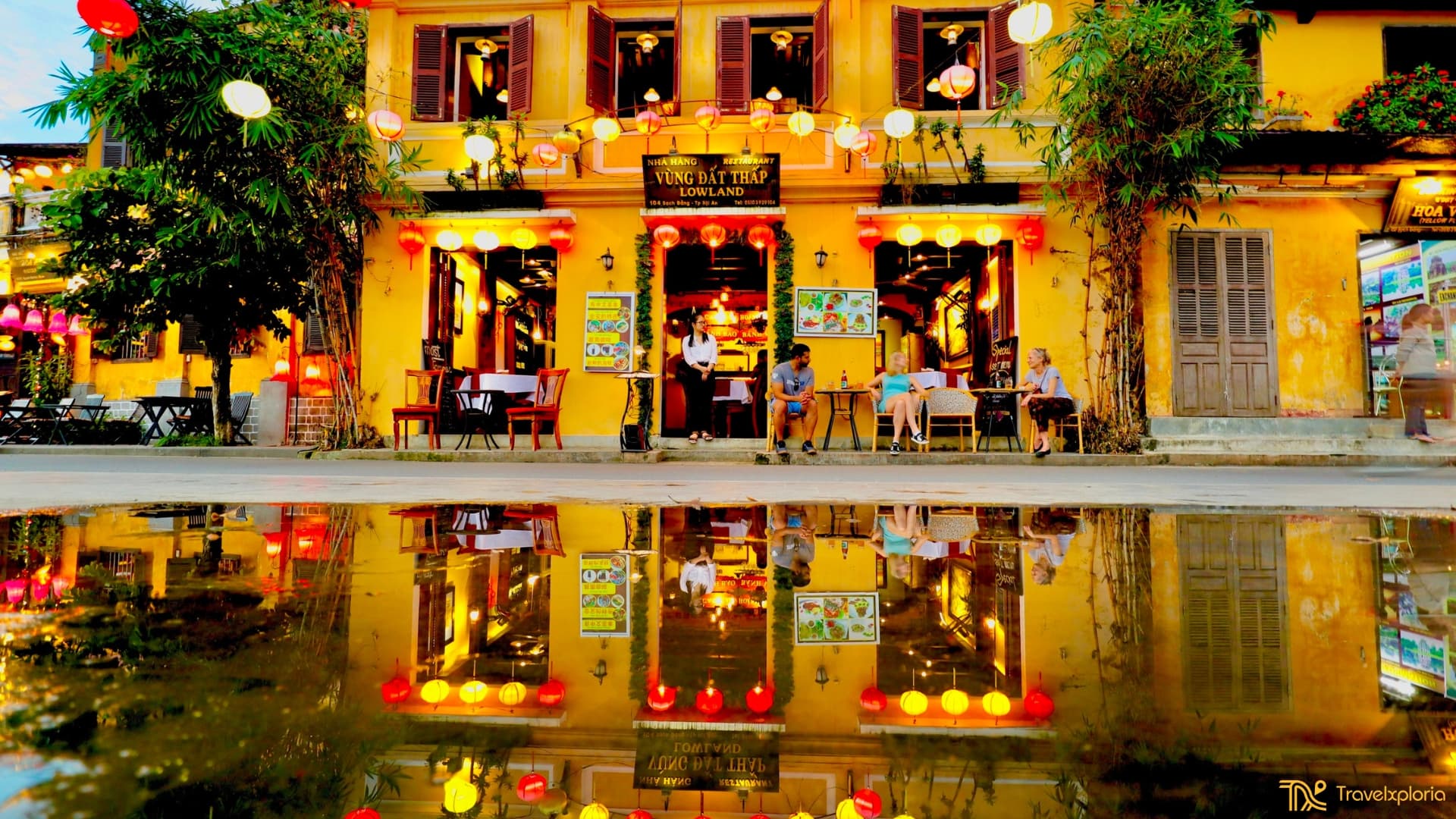
1. Hoi An. Lantern streets and old town romance
Hoi An is one of the most romantic places in Vietnam. The ancient town is filled with lantern-lit streets, riverside cafés, and preserved heritage buildings.
Why couples love Hoi An
Evening lantern walks along the river
Quiet streets after sunset
Intimate dining experiences
Beautiful architecture for couple photos
Romantic things to do
Release lanterns on the river at night
Take a couple cooking class
Enjoy a candlelit dinner by the waterfront
Walk the old town early morning before crowds arrive
Best for honeymooners and couples who enjoy culture, food, and slow evenings.
2. Ha Long Bay. Scenic cruises and sunset views
Ha Long Bay is famous for its limestone karsts rising from emerald waters. For couples, the highlight is an overnight cruise.
Why it works for couples
Private cabins with sea views
Sunset and sunrise over the bay
Quiet moments away from cities
Romantic things to do
Kayaking together among limestone islands
Watching sunset from the deck
Early morning views with coffee on board
Two days and one night is ideal for most couples.
3. Phu Quoc Island. Beach privacy and island calm
Phu Quoc is Vietnam’s most popular island for couples seeking beach relaxation.
Why couples choose Phu Quoc
Long sandy beaches
Quiet sunsets and warm water
Resorts designed for privacy
Romantic things to do
Sunset walks along the beach
Snorkeling or island hopping
Private beachfront dining
Relaxed mornings with sea views
Perfect for honeymoons or couples who want downtime after sightseeing.
4. Ninh Binh. Countryside romance and river landscapes
Often called the inland version of Ha Long Bay, Ninh Binh offers peaceful countryside scenery.
Why couples love Ninh Binh
Calm atmosphere
Scenic river valleys and rice fields
Less crowded than major cities
Romantic things to do
Boat rides through Tam Coc or Trang An
Cycling through rural villages
Sunset viewpoints over limestone cliffs
This destination suits couples who prefer nature and quiet moments.
5. Da Lat. Cool weather and mountain charm
Da Lat sits in the Central Highlands and feels very different from the rest of Vietnam.
Why Da Lat is romantic
Cool climate
Pine forests and lakes
Slower pace of travel
Romantic things to do
Lake-side walks
Coffee dates in hilltop cafés
Garden visits and scenic viewpoints
Ideal for couples who enjoy cooler weather and relaxed exploration.
6. Sapa. Mountain views and shared adventures
Sapa is best for couples who enjoy light adventure and dramatic scenery.
Why couples visit Sapa
Terraced rice fields
Mountain landscapes
Cultural village stays
Romantic things to do
Guided treks through rice terraces
Sunrise views from hilltops
Staying in quiet homestays
This destination works best for active couples.
Best Time to Visit Vietnam for Couples
Vietnam’s climate varies by region, so timing matters.
North Vietnam. Best from March to May and September to November
Central Vietnam. Best from February to April
South Vietnam and islands. Best from November to March
For honeymoons and romantic trips, dry seasons offer better travel comfort and clearer skies.
Practical Travel Tips for Couples
Choose boutique hotels or resorts with privacy-focused rooms
Avoid packing too many cities into one trip
Use internal flights to save time
Plan free evenings instead of over-scheduling activities
Vietnam is an exceptional destination for couples who want meaningful experiences without overwhelming travel stress. From lantern-lit streets and calm rivers to island sunsets and mountain views, Vietnam offers romance in many forms.
With the right planning, Vietnam can be both adventurous and deeply relaxing, making it one of the best couple-friendly destinations in Southeast Asia.